
Planning a pond can add value, function, and beauty to your property. A well-designed pond can support livestock, irrigation, fishing, wildlife, drainage, or recreation. However, the cost of pond excavation can vary widely from one property to another.
There is no single price that works for every project. The final cost depends on pond size, depth, soil conditions, terrain, equipment access, excavation volume, water management, and site preparation. Texas properties can also have very different soil and terrain conditions, making a proper site assessment especially important.
If you’re considering a new pond, understanding these cost factors can help you create a realistic budget and avoid unexpected expenses.
What Is Pond Excavation?
Pond excavation involves removing soil, rock, vegetation, and other materials to create the planned pond basin. Depending on the project, excavation may also include grading, embankment work, drainage improvements, spoil placement, and site cleanup.
The first step is determining what you want the pond to accomplish. A livestock pond may have different dimensions and features than a fishing pond, irrigation pond, or recreational water feature.
Site conditions also matter. The Natural Resources Conservation Service recommends considering factors such as soil, drainage area, pond layout, and water control when planning pond construction.
1. Pond Size and Dimensions
Pond size is one of the biggest factors affecting excavation cost.
A larger pond requires more excavation, more equipment time, and more labor. Increasing the pond’s width, length, or depth can significantly increase the amount of material that needs to be moved.
For example, a small farm pond may require considerably less earthwork than a large recreational or irrigation pond.
Before choosing dimensions, consider:
- Intended pond use
- Available property space
- Required water capacity
- Expected water sources
- Surrounding terrain
- Available excavation area
NRCS guidance notes that excavated pond dimensions depend on required capacity, site conditions, and the excavation equipment available.
2. Excavation Depth
Depth can have a major effect on the project price.
Deeper excavation means more soil must be removed. It can also require larger or specialized equipment depending on ground conditions and the desired pond design.
The appropriate depth depends on the pond’s purpose, water source, soil conditions, climate, and local requirements.
Going deeper simply because you want a larger pond is not always the most cost-effective approach. Proper planning can help you achieve the required water capacity without unnecessary excavation.
3. Soil and Ground Conditions
The type of soil on your property can dramatically affect excavation costs.
Soft, workable soil is generally easier to excavate than hard clay, rock, limestone, or heavily compacted ground. Rocky conditions may require additional equipment, attachments, labor, or excavation time.
Soil also affects how well a pond can retain water. NRCS guidance identifies suitable soil as an important consideration and notes that porous soils can create seepage problems.
A professional site assessment can help identify potential soil problems before excavation begins.
4. Property Terrain and Slope
The shape and elevation of your property can influence the amount of earthwork required.
Relatively flat areas may be suitable for excavated ponds, while sloped properties may require different construction approaches. Terrain can also affect how easily equipment can move around the site.
A property with difficult elevation changes may require:
- Additional grading
- Embankment construction
- More soil movement
- Drainage improvements
- Additional equipment time
Choosing the right pond location can therefore reduce unnecessary excavation work and control costs.
5. Equipment and Machinery
Pond excavation requires heavy equipment capable of efficiently moving large amounts of earth.
Depending on the project, contractors may use excavators, bulldozers, skid steers, dump trucks, or other specialized machinery.
Equipment selection depends on:
- Pond dimensions
- Soil conditions
- Site accessibility
- Excavation depth
- Amount of material
- Grading requirements
Larger equipment can increase productivity, but transportation and operating costs must also be considered.
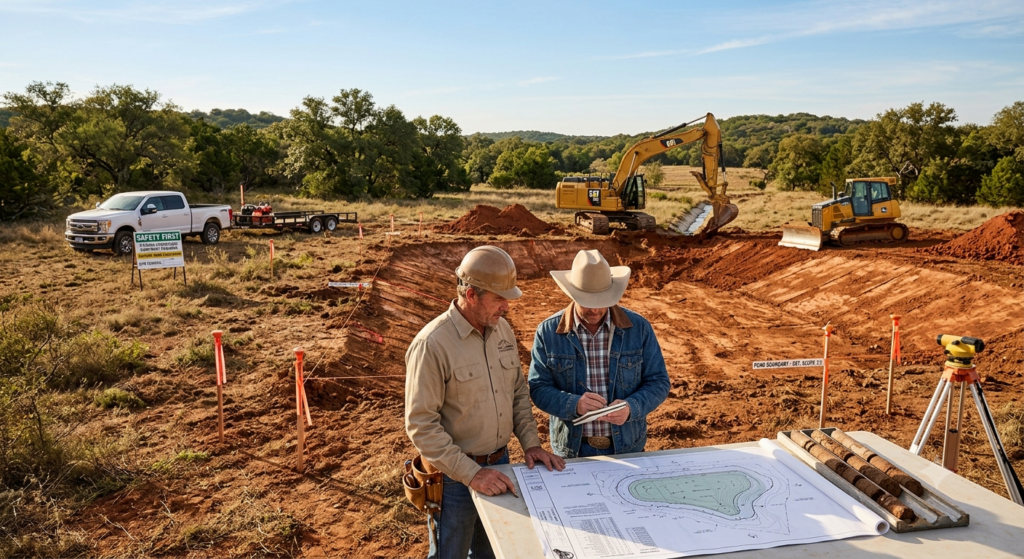
6. Site Accessibility
Getting heavy equipment to the pond location can affect your final price.
If the site has a clear access road, equipment can usually be transported and operated more efficiently. Narrow driveways, steep slopes, dense vegetation, muddy ground, or obstacles can make the project more complicated.
Difficult access may require additional preparation or equipment movement.
Before excavation begins, evaluate whether trucks and machinery can safely reach the proposed pond location.
7. Clearing and Site Preparation
Your pond location may not be ready for excavation.
Dense brush, trees, stumps, rocks, debris, or uneven ground may need to be removed first. Site preparation adds labor and equipment time but can make the excavation process more efficient.
If the property has heavy vegetation, combining land clearing with pond excavation may be an efficient approach.
Professional land clearing can prepare the site by removing unwanted vegetation and improving equipment access.
8. Soil Removal and Spoil Placement
Excavation produces a large amount of soil. What happens to that material can affect your project cost.
If suitable soil can remain on the property, it may be used for:
- Building berms
- Creating embankments
- Leveling low areas
- Improving access roads
- Grading surrounding land
If excess material needs to be hauled away, transportation and disposal costs can increase the project budget.
Planning where excavated material will go before work begins can prevent unnecessary hauling expenses.
9. Drainage and Water Management
Water management is another important part of pond planning.
The pond needs an appropriate source of water and a way to safely manage overflow. Depending on the property, the project may require drainage channels, spillways, pipes, overflow structures, or other water-control features.
A pond’s watershed and drainage area should be considered during planning. Proper design can help the pond receive adequate water while reducing potential problems caused by excessive runoff.
These features can increase the overall project cost, but they can also contribute to a safer and more functional pond.
10. Pond Design and Additional Features
The final pond design can significantly change the budget.
A basic agricultural pond may have a relatively simple design. A recreational or fishing pond may require additional grading, shoreline work, drainage structures, habitat features, or landscaping.
Potential additions include:
- Fishing areas
- Livestock access
- Watering points
- Sloped shorelines
- Spillways
- Drainage systems
- Erosion-control features
- Landscaping
- Access roads
The more customized the project becomes, the more important detailed planning becomes.
11. Permits, Regulations, and Site Requirements
Depending on your property’s location and the scope of the work, permits, environmental requirements, drainage considerations, or engineering services may affect the project.
Texas properties can have different requirements depending on the location and project circumstances. Before beginning major earthwork, determine whether your project requires approvals or professional design assistance.
The NRCS recommends using locally applicable technical standards when planning conservation pond projects rather than relying solely on national guidance.
Checking requirements early can help prevent costly delays.
How Much Does Pond Excavation Cost?
Pond excavation costs vary too much to provide one universal price.
Current industry examples show that even a relatively modest pond can involve tens of thousands of dollars when excavation, earthwork, access, dam or overflow work, and finishing are included. One 2026 Texas contractor guide, for example, emphasizes that soil, terrain, access, and project requirements can cause substantial price differences.
Another 2026 pond construction guide gives an example of approximately $35,000–$39,000 for a ½-acre pond under ideal conditions, while stressing that this is a planning range rather than a fixed quote.
For this reason, property owners should treat online cost ranges as general budgeting information rather than guaranteed project prices.
Ways to Keep Pond Excavation Costs Under Control
You do not necessarily need to choose the cheapest excavation option. Instead, focus on reducing unnecessary work while maintaining a functional design.
Choose the Location Carefully
A good location can reduce excavation, grading, and drainage complications.
Determine Your Purpose First
Know whether your pond is primarily for livestock, irrigation, fishing, wildlife, drainage, or recreation. This helps determine the appropriate size and design.
Use Excavated Soil Wisely
If suitable material can be reused on-site, you may reduce hauling and disposal costs.
Prepare the Site Before Excavation
Removing brush, trees, and obstacles beforehand can improve equipment access and workflow.
Compare Detailed Quotes
Ask contractors to explain excavation, grading, material handling, equipment, and additional site work separately.
Avoid Unnecessary Features
Extra features can be added later if they are not essential to the pond’s initial purpose.
Why Professional Pond Excavation Matters
Pond excavation is more than simply digging a hole.
A properly planned project considers the site’s soil, terrain, drainage, dimensions, water source, and intended use. Poor planning can lead to excessive seepage, drainage problems, erosion, inadequate water capacity, or expensive corrections.
Professional excavation also provides access to the heavy machinery and experience needed to move large quantities of material efficiently.
If you’re planning Pond Excavation on a Texas property, working with an experienced contractor can help you understand the site’s challenges before major earthwork begins.
Choosing a Pond Excavation Contractor
Before hiring a contractor, ask about:
- Previous pond excavation projects
- Equipment available
- Experience with Texas properties
- Site preparation services
- Soil and excavation challenges
- Material placement
- Drainage and water management
- Project timeline
- Detailed pricing
- References or previous work
A good contractor should be able to explain what affects your project’s price instead of giving you a vague number without examining the property.
Professional Pond Excavation in Texas
If you’re planning Pond Excavation Texas property owners can benefit from professional site preparation, excavation, grading, and earthwork services.
Pond Excavation Services can help property owners prepare for pond projects by addressing the excavation and land-management needs involved in creating a functional pond.
The right approach starts with understanding your property rather than choosing a price from an online calculator.
Conclusion
Pond excavation costs depend on much more than the size of the pond.
Soil conditions, depth, terrain, equipment, site access, vegetation, spoil placement, drainage, design, and regulatory requirements can all affect the final budget.
The best way to control costs is to plan the project carefully, choose an appropriate location, understand the property’s soil and drainage conditions, and obtain a detailed quote based on an actual site assessment.
Whether you’re building a livestock pond, fishing pond, irrigation pond, or recreational water feature, good planning can help you avoid unnecessary expenses and create a pond that serves your property for years to come.